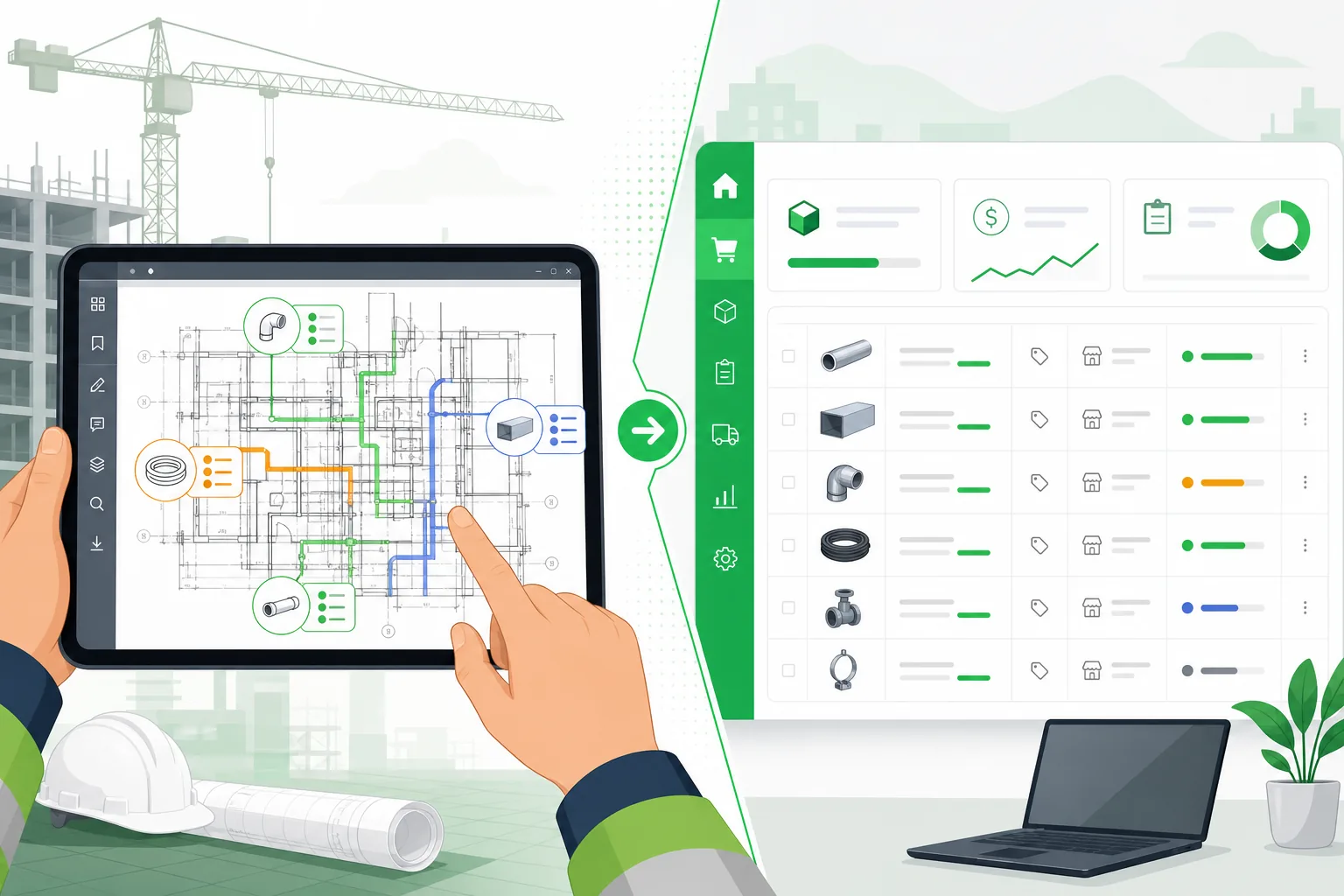
Bid Day Is Tomorrow and You Haven't Started the Takeoff
Every electrical contractor knows the feeling. It's 2 PM on a Tuesday. The GC just sent over a 200-page drawing set for a retail tenant fit-out. Bid is due Thursday morning. Your estimator is already buried in another project. The choices are familiar and bad: skip the bid, or pull an all-nighter doing manual takeoff and hope the numbers hold.
This is the exact scenario that brings most of Aginera's users through the door. Not a planned software evaluation. Not a quarterly procurement decision. A contractor with a real project, a real deadline, and no time to count symbols on PDFs.
The Pattern We Keep Seeing
We've been watching how electrical contractors actually use Aginera when they sign up, and a clear pattern has emerged — especially among contractors who find us through search while looking for faster ways to estimate.
They don't start with a demo. They start with a project.
Within 30 minutes of creating an account, they've uploaded a full drawing set and are running their first extraction. Within two hours, they have a priced estimate with line items, sections, overhead, and profit margins applied. These aren't tire-kickers evaluating software. They're estimators with a bid due and a problem to solve.
The projects they bring fall into a few specific categories. Understanding these tells you a lot about where the industry's pain is most acute.
Project Type 1: Commercial Tenant Fit-Outs
Retail and commercial tenant fit-outs are the single most common project type we see from first-time users. Think national retail chains, restaurants, medical offices, and bank branches going into existing shell spaces.
A typical tenant fit-out electrical scope includes:
- Lighting: LED troffers, downlights, accent lighting, emergency fixtures, exit signs — often 60–100+ fixtures for a 10,000 SF space
- Power: Duplex receptacles, dedicated circuits for POS systems and café equipment, GFCI outlets in wet areas — frequently 80–100+ devices
- Low voltage: Data outlets, telecommunications racks, CCTV rough-in, fire alarm devices
- Distribution: Panelboards, sub-panels, sometimes a main switchboard depending on the lease structure
- Controls: Programmable lighting control systems with relay panels, occupancy sensors, daylight harvesting
What makes tenant fit-outs especially painful for estimators is the per-project economics. These are typically $150K–$400K electrical contracts. Not large enough to justify a week of estimating time, but complex enough that you can't ballpark it. Every fixture, every receptacle, every home-run conduit needs to be counted and priced. Miss the power poles for the cash registers and you've just donated $15,000 in labor and material.
Here's what a typical workflow looks like: a contractor uploads 20+ documents — individual electrical sheet PDFs split from the bid set, plus specifications and a subcontractor bid breakout. Lighting plans, power plans, HVAC electrical plans, panel schedules, electrical details, fire protection. The full scope.
Within the same session, the AI extracts every device, infers conduit and wiring quantities, parses the panel schedules, and generates a sectioned estimate:
| Section | Items | Typical Range |
|---|---|---|
| Mobilization & General Requirements | 2–3 | $15K–$35K |
| Demolition & Site Preparation | 1–2 | $3K–$10K |
| Electrical / Low-Voltage / Fire Alarm | 15–25 | $150K–$250K |
| General Conditions | 1 | $15K–$30K |
| Permits, Testing & Inspections | 2 | $5K–$12K |
| Bonds & Insurance | 2 | $4K–$10K |
| Contingency | 1 | $15K–$25K |
A $250K–$350K estimate with 25–30 line items across 7 sections — generated from the uploaded drawings, not from a template. Power poles for workstations and cash registers? Counted. Programmable lighting control relay panels? Identified from the specs. 2,000+ linear feet of power conduit and 1,500 LF of low-voltage conduit? Inferred from the device layout and panel locations.
Estimators commonly run it twice, adjusting scope between iterations. Both estimates complete within the same afternoon.
Project Type 2: EV Charging Station Installations
The second pattern we see repeatedly is EV charging infrastructure — and it's growing fast.
EV charging projects have a unique estimating challenge: they're electrically intensive but don't look like traditional building electrical. The scope is dominated by heavy feeders, switchgear, and site work rather than device counts. An estimator who is used to counting receptacles and light fixtures has to shift into a different mode — sizing 1200A switchboards, calculating conductor runs to individual charger pedestals, and pricing concrete pads and protective bollards.
A typical EV charging project we see uploaded involves a distribution center or commercial parking facility with 10–20 charger stations. The scope is heavier than most building electrical work:
| Line Item | Typical Quantity | Cost Range |
|---|---|---|
| Main Switchboard (800A–1200A) | 1 | $25K–$35K |
| Distribution Panel Boards | 3–5 | $15K–$25K |
| CT Cabinet & Metering | 1–2 | $3K–$5K |
| Utility Transformer (customer side) | 1 | $30K–$50K |
| Conductors & Conduit per Charger | 10–20 stations | $70K–$120K |
| Protective Bollards (concrete-filled) | 40–80 | $30K–$50K |
| Site Re-striping & Restoration | 3,000–5,000 SF | $20K–$35K |
| Concrete Equipment Pads | 2–4 | $5K–$10K |
Total estimates for these projects typically land in the $200K–$350K range, with overhead at 2–5% and profit at 8–12%.
One of the most common scope nuances we see: the owner is furnishing the chargers and major switchgear, and the contractor is only pricing the installation — known as OFCI (Owner-Furnished, Contractor-Installed). The estimate has to separate furnished equipment from installation labor, which is a distinction that generic estimating tools don't understand but experienced electrical contractors deal with on every project.
EV charging projects are multiplying across commercial real estate, distribution centers, retail parking, and municipal fleets. The contractors who can price them quickly — and accurately distinguish between equipment supply and installation scope — are winning the work.
Why These Projects Come to AI First
The contractors using Aginera for these projects share a few characteristics:
They're small to mid-size firms. One to three estimators. Maybe the owner is still estimating. They don't have the bench depth to throw a person at every bid for three days. Every bid they skip is revenue they'll never see.
They're electrical-first. These aren't general contractors. They're EC firms — electrical contractors — who live and die by the accuracy and speed of their electrical estimates. The estimator who signs up has 10–30 years of field experience. They know exactly what a receptacle installation costs. What they don't have is 16 hours to count every symbol on a 150-page drawing set.
They found us while looking for a solution to a specific problem. The search queries that bring these users in tell the story: "AI electrical estimating software", "automatic takeoff from construction drawings", "fast electrical bid estimate from PDF". These are people who already know what they need. They're not browsing — they're solving.
They test with a real project, not a sample file. The first upload is always a live bid. If the AI produces something useful on their actual drawings, they're in. If it doesn't, they move on. There's no patience for demo environments or synthetic examples when there's a deadline.
The Speed Difference Is the Whole Point
Traditional electrical estimating workflow for a commercial tenant fit-out:
| Stage | Manual Time |
|---|---|
| Plan review and sheet organization | 1–2 hours |
| Device counting (every sheet) | 4–8 hours |
| Conduit and wire quantification | 6–12 hours |
| Panel schedule cross-referencing | 2–4 hours |
| Assembly and labor buildup | 3–6 hours |
| Pricing and proposal formatting | 2–4 hours |
| Total | 18–36 hours |
AI-assisted workflow on the same project:
| Stage | Time |
|---|---|
| Upload drawings | 5 minutes |
| AI extraction and classification | 3–10 minutes |
| Review extracted quantities | 20–40 minutes |
| Generate estimate with pricing | 2–5 minutes |
| Adjust sections, markup, scope notes | 30–60 minutes |
| Total | 1–2 hours |
That's not a 20% improvement. It's a structural change in how many bids you can submit per week. A two-person estimating team that currently bids 6 projects a month can bid 20. The math on won work shifts dramatically.
What Estimators Actually Do With the Time
The contractors we've talked to aren't using the saved time to relax. They're using it to:
-
Bid more work. The most direct impact. More bids submitted means more projects won, which means more revenue for the same overhead.
-
Spend time on scope clarification instead of counting. When the takeoff is done in minutes, the estimator can actually read the specifications, call the GC with questions, and understand what they're pricing — instead of rushing through a count-and-guess exercise.
-
Run multiple estimate scenarios. "What if we self-perform the fire alarm? What if we sub it out? What's the number with and without the lighting controls?" When each estimate takes minutes instead of days, scenario analysis becomes practical.
-
Catch scope gaps before they become change orders. The AI flags items it found in the drawings that might be missing from the estimate. A $3,500 fire alarm control panel that was on the floor plan but didn't make it into the panel schedule. Power poles that appeared in the architectural plans but weren't on the electrical sheets.
How to Get Started
If you're an electrical contractor with a project to price, here's the fastest path:
- Sign up at aginera.ai. Free trial, no credit card required.
- Create a project and give it the job name.
- Upload your drawing PDFs. Individual sheets or a combined set — the system handles both. You can also upload specifications, bid breakout sheets, and equipment submittals.
- Run the extraction. The AI classifies every sheet, identifies devices, parses schedules, and builds a quantity takeoff.
- Generate an estimate. Apply your overhead, profit, and contingency percentages. Add or remove line items. Export or send directly.
The whole process takes less time than reading this article.
If your estimator is currently staring at a 150-page drawing set wondering how they're going to get the bid in by Thursday — this is what Aginera was built for.