Electrical Takeoff for Indian Construction Projects: IS Standards, Wiring Codes, and AI Automation
India's electrical construction market is massive and growing. From IT parks in Bengaluru and Hyderabad to metro rail stations across 25+ cities, from Smart City infrastructure to the explosion of commercial high-rises in Mumbai, Pune, and NCR — every project requires electrical takeoff, and every electrical contractor is doing it under pressure.
But electrical takeoff in India has characteristics that make it distinct from the process in the US, UK, or Middle East. The standards are different. The drawing conventions have regional variations. The BOQ format follows CPWD and state PWD structures. The unit rates come from DSOR or state-specific schedule of rates rather than vendor databases.
This guide covers the full electrical takeoff process for Indian construction projects — what makes it unique, where estimators struggle, and how AI is automating the workflow.
What Makes Indian Electrical Takeoff Different
IS Code Compliance
Indian electrical installations are governed by a set of IS (Indian Standard) codes that differ from the NEC (US), BS 7671 (UK), or UAE regulations:
| Standard | Coverage |
|---|---|
| IS 732:2019 | Code of practice for electrical wiring installations (the primary Indian wiring code) |
| IS 3043 | Earthing and grounding practices |
| IS 694 | PVC insulated cables for voltage up to 1100V |
| IS 1554 | PVC insulated heavy-duty cables |
| IS 8623 | Industrial plugs and socket outlets |
| IS 1293 | Marking and arrangement of switchgear and control gear |
| NBC 2016 Part 8 | National Building Code — electrical and allied services |
When preparing an electrical takeoff, the quantities must align with IS code requirements. For example, IS 732 specifies requirements for circuit protection, cable sizing, earthing provisions, and accessory ratings that affect material quantities directly. An estimator who misses the earthing conductor requirements under IS 3043 will undercount copper by a significant margin.
CPWD and PWD BOQ Formats
Government projects in India follow the Central Public Works Department (CPWD) or state PWD bill of quantities format. This is fundamentally different from the CSI MasterFormat used in the US:
- CPWD organizes items by sub-head (internal wiring, external wiring, earthing, DG set installation, transformer installation)
- Each item has a standard description with embedded specifications (cable type, size, method of installation)
- Rates reference the Delhi Schedule of Rates (DSOR) or state-specific schedule of rates
- Quantities must be in metric units (meters, square meters, numbers)
Private projects use their own formats, often a hybrid of CPWD structure and consultant-specific templates. The key point: the takeoff output must match the client's BOQ format, which is India-specific.
Drawing Conventions
Indian electrical drawings broadly follow IEC conventions but with local variations:
- Symbol standards generally align with IS 1293 and IEC 60617, but many consultants use their own legend
- Wiring layouts often show conduit routing explicitly (unlike US power plans that may only show device locations)
- Load schedules appear alongside panel schedules, showing connected and demand loads per circuit
- Earthing layouts are typically separate drawings — often missing from the takeoff because estimators focus on power and lighting first
- DG and UPS systems are usually included in the electrical scope in India, requiring separate takeoff for generator connections, ATS, and UPS distribution
The Electrical Takeoff Process for Indian Projects
Step 1: Drawing Review and Scope Identification
A typical Indian commercial electrical drawing set includes:
- Power layout plans — receptacle and equipment connection locations per floor
- Lighting layout plans — luminaire locations, switching, and circuiting
- Panel schedules and load schedules — circuit-wise load details
- Single-line diagrams (SLD) — power distribution from transformer/DG to distribution boards
- Earthing layout — earthing grid, pits, and conductor routing
- Cable routing plans — tray and conduit routing, riser diagrams
- Fire alarm layout — detector, sounder, and manual call point locations
- Low-voltage systems — CCTV, access control, PA system, structured cabling
The scope review determines which drawings are in your contract and which belong to other agencies.
Step 2: Quantity Extraction by System
Internal Wiring
- Count every switch, socket, fan regulator, and plate per room
- Measure conduit runs from distribution boards to each point
- Calculate wire lengths based on conduit routing plus termination allowances
- Include concealed conduit accessories: junction boxes, pull boxes, bends
Lighting
- Count luminaires by type: surface, recessed, track, emergency, exterior
- Count switching devices and group by switching zones
- Measure cable/conduit for lighting circuits
Power Distribution
- List all panels, DBs, and sub-DBs with specifications
- Measure LT cable runs from SLD or cable routing drawings
- Count cable trays and ladder racks in linear meters
- Include termination accessories: glands, lugs, ferrules
Earthing
- Measure earthing conductor runs (GI strip, copper strip) in meters
- Count earthing pits and electrode assemblies
- Measure earth bonding connections to equipment
Fire Alarm and Low Voltage
- Count detectors, sounders, MCPs per floor from fire alarm layouts
- Count cameras, card readers, speakers from respective LV layouts
- Measure cable runs for each system
Step 3: Rate Application and BOQ Compilation
Rates in India come from multiple sources:
- DSOR / State SOR for government projects (updated annually or biannually)
- Vendor quotations for specific equipment (panels, luminaires, cables from Havells, Polycab, Finolex, etc.)
- Historical rates from the contractor's past projects
- Market rates from local electrical markets (Bhagirath Palace for Delhi, Lohar Chawl for Mumbai)
The BOQ is compiled in the client's required format — CPWD sub-heads for government, or consultant-specific templates for private projects.
Where Indian Electrical Estimators Lose Time
Based on conversations with estimating teams across India:
- Counting is still manual — most firms still count devices from printed drawings or PDF viewers, marking with highlighters
- Conduit measurement is imprecise — estimators approximate conduit runs rather than measuring actual routing because it takes too long
- Earthing is often underestimated — earthing drawings are reviewed last (if at all) and quantities are rough
- Revisions require full re-work — when consultants issue revised drawings (which happens on 80%+ of projects), the takeoff starts over
- BOQ formatting takes days — converting raw quantities into the client's BOQ format with proper descriptions and sub-head organization is tedious manual work
How AI Automates Indian Electrical Takeoff
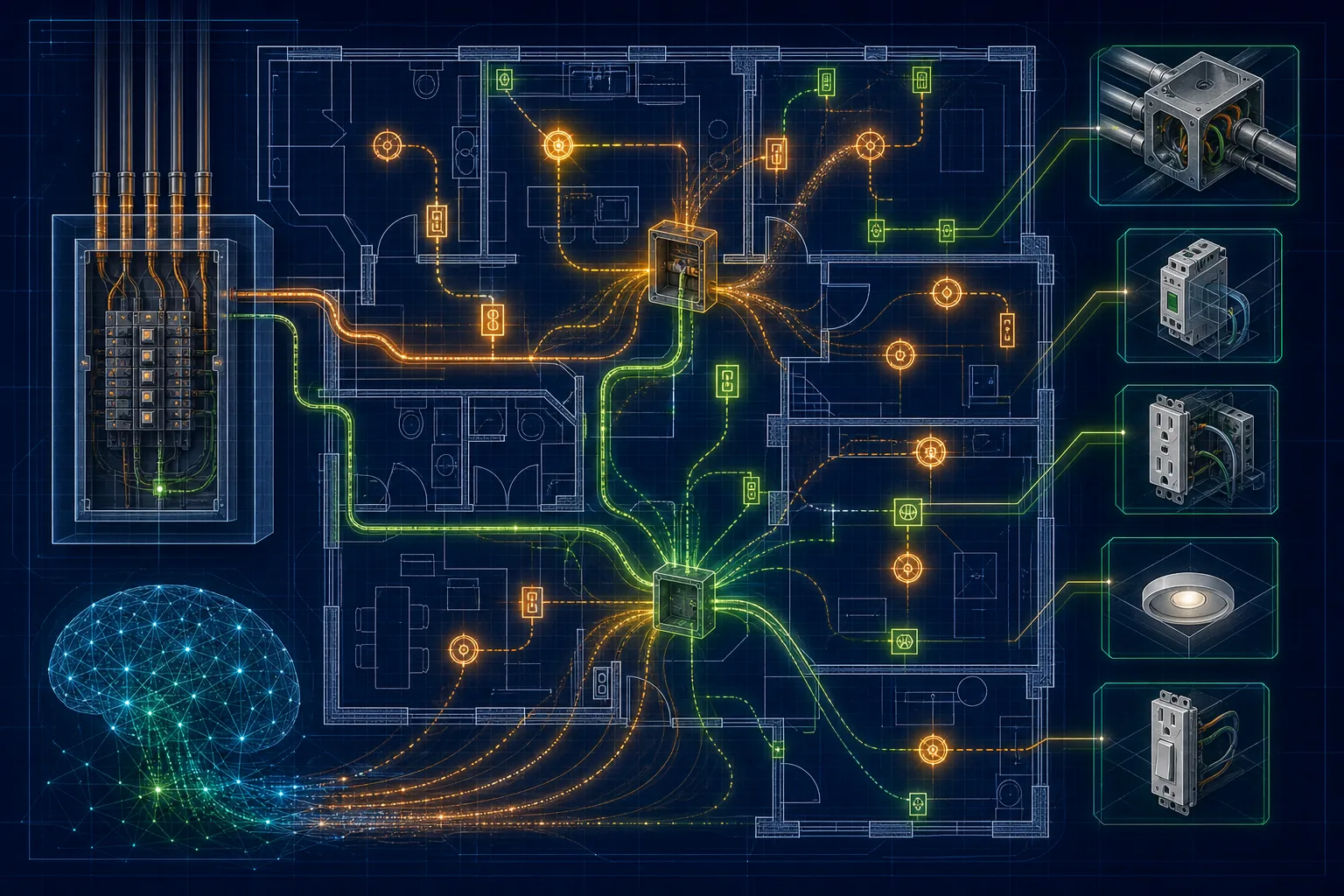
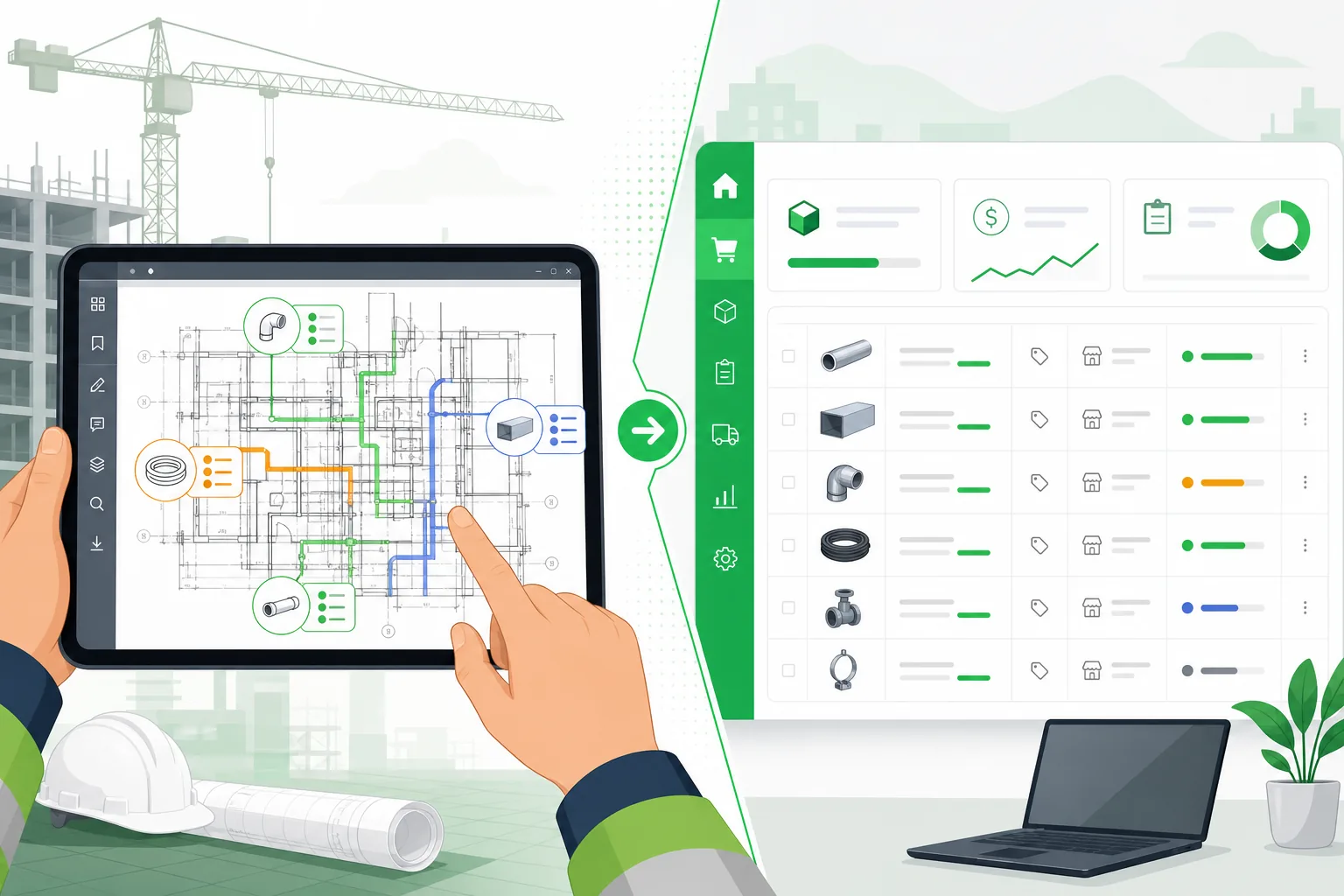
AI-powered takeoff platforms designed for MEP extraction can handle Indian electrical drawings with the same core technology used for US and Middle East projects, with adaptations for Indian conventions:
What AI Handles Well
- Symbol counting — identifies receptacles, switches, luminaires, detectors, and other devices from floor plans regardless of symbol standard (IS or IEC)
- Panel schedule reading — extracts circuit data, load calculations, and breaker specifications from tabular panel schedule drawings
- Multi-sheet aggregation — processes all sheets in a drawing set and aggregates quantities by type across floors
- Conduit and cable measurement — traces visible conduit routing on plans and calculates linear meter quantities
- Revision processing — when revised drawings are uploaded, only changed sheets need re-extraction
What Still Needs Human Review
- Rate application — the AI extracts quantities, but applying DSOR rates or vendor quotations requires estimator judgment
- Scope boundaries — determining what is in your scope versus another agency's scope is a contract question, not a drawing question
- Non-standard legends — some consultants use custom symbols that require one-time mapping
- Earthing calculations — earthing electrode sizing involves soil resistivity calculations that go beyond visual takeoff
The Time Savings for Indian Contractors
| Project Type | Manual Takeoff Time | AI + Review Time | Savings |
|---|---|---|---|
| Small commercial (30 sheets) | 2–3 days | 2–3 hours | 80–85% |
| Mid-rise commercial (100 sheets) | 5–7 days | 4–6 hours | 85–90% |
| Large IT park / institutional (300+ sheets) | 10–15 days | 1–2 days | 80–85% |
For Indian MEP contractors bidding on 5–10 projects per month, this time savings translates directly into bid capacity. Instead of skipping tenders because the estimating team is occupied, you can respond to every opportunity that fits your capabilities.
Getting Started
If you are an Indian electrical contractor evaluating AI takeoff software, the practical next steps are:
- Test with your actual drawings — upload a recent project's electrical set and compare the AI output with your manual takeoff
- Check discipline coverage — ensure the tool handles power, lighting, fire alarm, and LV systems — not just one discipline
- Verify output format flexibility — can you export in your BOQ format, or does it only produce the vendor's template?
- Ask about revision handling — this is where the real time savings compound over a project's lifecycle
The Indian construction market is not slowing down. The firms that will win the most work are the ones that can estimate faster and more accurately than their competition. AI electrical takeoff is the most direct path to that advantage.
Aginera processes electrical drawings from Indian projects — IS code symbols, CPWD formats, multi-system coverage. Upload your drawings free and see the results.